Applying Sports Rehab Principles to Pelvic Health

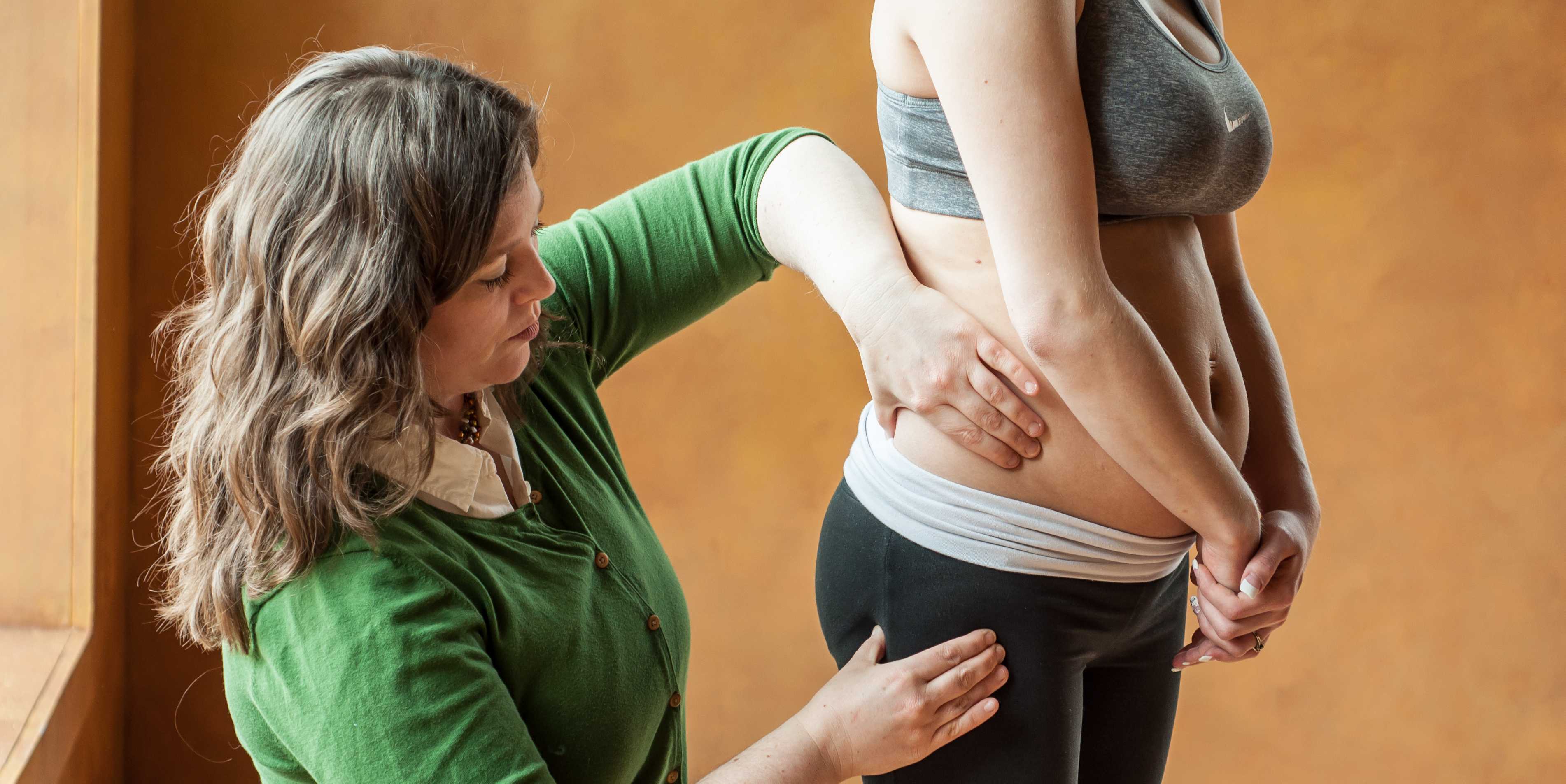
When we think of sports rehab, we typically envision athletes returning to the court after an ankle sprain or knee injury. But what if the same principles of rigorous assessment, load transfer optimization, movement education, and functional stability could apply to one of the body’s most critical yet under‑appreciated joints: the sacroiliac joint (SIJ)?
For clinicians working in pelvic health, embracing a sports‑rehab mindset can transform how we evaluate and treat SIJ dysfunction and pain, and recent research supports this crossover approach. Now might just be the ideal time to integrate these strategies into your practice.
Why Sports Rehab Principles Matter for SIJ/Pelvic Health
- High prevalence of SIJ issues in athletic populations: A 2024 systematic review found that among athletes, average prevalence of SIJP or SIJD was ~10.7%, with rates much higher (32–36%) in those presenting with low back or pelvic pain. (Mirdamadi et al, 2025)
- SIJ dysfunction often coexists with lower extremity injuries: In a 2023 study of basketball players, those with SIJ pain or dysfunction reported significantly more lower-limb and pelvic‑girdle injuries, both acute and overuse, than their peers without SIJ complaints. (Abdollahi et al, 2023)
- Biomechanics and load transfer matter: The SIJ plays a key role in transmitting loads between the spine and lower extremities. Disruption in force transmission, whether from muscular imbalance, altered movement patterns, or pelvic instability, may contribute not just to SIJ pain, but to secondary injuries elsewhere. (Prather, 2000; Abdollahi et al, 2023)
These findings align closely with core sports‑rehab principles: assessing mechanical and neuromuscular impairments, correct faulty movement or load patterns, and restore stability and function before returning to high‑demand activity.
Translating Sports‑Rehab Strategies into Pelvic Health Practice
Here are some of the evidence-based crossover strategies that pelvic rehab clinicians can begin using:
- Comprehensive Functional Assessment: Rather than isolating the SIJ, consider the entire kinetic chain. For instance, when evaluating an athlete (or active individual) with lower extremity complaints, include SIJ screening - given its association with lower‑limb injuries. (Abdollahi et al, 2023)
- Dynamic & Stabilization Exercises: Inspired by sports rehab protocols, incorporating exercises that challenge stability, proprioception, and dynamic load transfer can be effective. A case study combining Swiss‑ball training, mobilization with movement, and taping demonstrated promising results in an athlete with concurrent SIJD and ankle sprain. (Shedge et al, 2024)
- Manual Therapy + Movement Integration: While manual therapy alone has mixed evidence, a recent meta‑analysis found that SIJ manual therapy did not significantly reduce pain vs. non-manual interventions but did improve disability moderately. Combining manual therapy with functional movement and exercise tends to align with best-practice sports rehab philosophy. (Trager at al, 2024)
- Holistic, Movement‑Based Rehab Over “Fixing” Passive Structures: Rather than focusing solely on static “joint alignment” or joint‑centric correction, prioritize restoring functional movement, load capacity, and neuromuscular control - all principles that athletic trainers and sports PTs rely on routinely.
Why This Matters - For Both Clinicians and Clients
Adapting a sports‑rehab informed paradigm for SIJ/pelvic health offers several advantages:
- Broader applicability: Whether your client is a weekend runner, a postpartum individual, or a competitive athlete, a functional, movement‑based SIJ rehabilitation model supports real‑world demands.
- Better injury prevention and reduced recurrence: By addressing underlying load‑transfer dysfunction and neuromuscular control, not just symptoms, you may reduce the risk of future pelvic or lower‑extremity injuries.
- Improved patient buy-in: Clients often resonate with language around “stability,” “function,” and “return to activity.” Familiar terms from sports rehab, which can increase compliance and perceived relevance.
Connect the Dots Between Sports Rehab & Pelvic Rehab - Take the 4‑Hour Course
If you’re ready to bridge the gap between sports rehab and pelvic health, I invite you to join the upcoming four‑hour remote course, Sacroiliac Joint Current Concepts, taught by experienced former NHL physical therapist and athletic trainer Steve Dischiavi, PT, PhD, DPT, MPT, SCS, ATC, COMT.
📅 Date: January 25, 2026
📚 You’ll receive:
- A full, easy‑to-follow SIJ exam sequence - optimized for a pelvic‑health context.
- Treatment strategies aligned with current evidence and sports rehab biomechanics.
- Practical tools you can integrate into your clinical practice immediately (Monday morning!)
Transform your approach and help clients move, perform, and heal better. Register today to reserve your spot.
References
- Mirdamadi N, Khadembashiri MM, Moghadam N, Kordi R. Prevalence and Risk Factors of Sacroiliac Joint Pain in Athletes: A Systematic Review and Proportional Meta-Analysis. Clin J Sport Med. 2025 Mar 26;35(4):514-525. doi: 10.1097/JSM.0000000000001341. PMID: 40135982.
- Abdollahi, S., Sheikhhoseini, R., Rahimi, M. et al. The sacroiliac dysfunction and pain is associated with history of lower extremity sport related injuries. BMC Sports Sci Med Rehabil 15, 36 (2023). https://doi.org/10.1186/s13102-023-00648-w
- Prather H. Pelvis and sacral dysfunction in sports and exercise. Phys Med Rehabil Clin N Am. 2000 Nov;11(4):805-36, viii. PMID: 11092020.
- Shedge SS, Ramteke SU, Samal S. Integrated Rehabilitation Approach Utilizing Swiss Ball Training, Mulligan Taping, and Mobilization With Movement for Simultaneous Management of Sacroiliac Joint Dysfunction and Lateral Ankle Sprain in a Badminton Athlete: A Case Study. Cureus. 2024 Mar 26;16(3):e56942. doi: 10.7759/cureus.56942. PMID: 38665699; PMCID: PMC11044192.
- Trager RJ, Baumann AN, Rogers H, Tidd J, Orellana K, Preston G, Baldwin K. Efficacy of manual therapy for sacroiliac joint pain syndrome: a systematic review and meta-analysis of randomized controlled trials. J Man Manip Ther. 2024 Dec;32(6):561-572. doi: 10.1080/10669817.2024.2316420. Epub 2024 Feb 14. PMID: 38353102; PMCID: PMC11578406.
By accepting you will be accessing a service provided by a third-party external to https://www.hermanwallace.com/
All Upcoming Continuing Education Courses

Biofeedback for Pelvic Muscle Dysfunction Satellite Lab Course - Self-Hosted - December 13 2025
Dec 13 2025

Pelvic Function Level 2B - Satellite - St. Petersburg FL - December 13 - 14 2025
Dec 13 2025 - Dec 14 2025

Pelvic Function Level 1 - In-Person - Kalispell MT - December 13 - 14 2025
Dec 13 2025 - Dec 14 2025

Pelvic Function Level 2B - Satellite - Baltimore MD - December 13 - 14 2025
Dec 13 2025 - Dec 14 2025

Pelvic Function Level 1 - In-Person - New York NY - December 21 - 22 2025 - SOLD OUT
Dec 21 2025 - Dec 22 2025

Pelvic Function Level 1 - Satellite - Torrance CA - January 10 - 11 2026 - SOLD OUT
Jan 10 2026 - Jan 11 2026

Oncology of the Pelvic Floor Level 1 - Remote Course - January 10 - 11 2026
Jan 10 2026 - Jan 11 2026



Pelvic Function Level 1 - Satellite - Santa Cruz CA - January 10 - 11 2026
Jan 10 2026 - Jan 11 2026

Pelvic Function Level 1 - Satellite - Huntsville AL - January 10 - 11 2026
Jan 10 2026 - Jan 11 2026


Menopause Transitions and Pelvic Rehab - Remote Course - January 17 - 18 2026
Jan 17 2026 - Jan 18 2026

Dry Needling and Pelvic Health 2 - In-Person - Duluth MN - January 24 - 25 2026
Jan 24 2026 - Jan 25 2026

Pelvic Function Level 1 - Satellite - Bethpage NY - January 24 - 25 2026- SOLD OUT
Jan 24 2026 - Jan 25 2026

Pelvic Function Level 2B - Satellite - Port St. Lucie FL - January 24 - 25 2026
Jan 24 2026 - Jan 25 2026

Pelvic Function Level 2B - Satellite - Indianapolis IN - January 24 - 25 2026
Jan 24 2026 - Jan 25 2026

Modalities and Pelvic Function - In-Person - Boston MA - January 24 - 25 2026
Jan 24 2026 - Jan 25 2026


Pelvic Function Level 2B - Satellite - St. Augustine FL - January 24 - 25 2026
Jan 24 2026 - Jan 25 2026






Pelvic Function Level 1 - Satellite - Los Angeles CA - January 24 - 25 2026
Jan 24 2026 - Jan 25 2026




Pelvic Function Level 1 - In-Person - Columbus OH - January 31 - February 1 2026
Jan 31 2026 - Feb 1 2026
Pelvic Function Level 2C - Satellite - Boston MA - January 31 - February 1 2026
Jan 31 2026 - Feb 1 2026

Pelvic Function Level 2C - Satellite - Omaha NE - January 31 - February 1 2026
Jan 31 2026 - Feb 1 2026


Pelvic Function Level 1 - Satellite - Fairfax VA - February 7 - 8 2026 - SOLD OUT
Feb 7 2026 - Feb 8 2026