You may be reading this thinking, “I don’t treat Intersex patients in my practice. I’ve never even met anyone who is Intersex. What’s the point of learning about Intersex variations?” However, statistically speaking, you most likely have met someone who is Intersex, and you might even have a few patients right now who are Intersex (but you just don’t know it)!
In fact, 1.7% of the population is Intersex. This is about the same percentage of folks who are redheads. So, if you’ve ever seen someone walking down the street or treated someone in your clinic as a patient who has red hair, you’ve probably also seen and treated someone who was Intersex.
Someone who is Intersex may have variations in their hormones, chromosomes, internal reproductive anatomy, and/or external/genital anatomy. Intersex variations can be found in utero during pregnancy, at birth, during adolescence if someone has not undergone puberty by the typical age, during examinations in adulthood while screening for other health issues, and during adulthood if someone is struggling with conception. Some folks even go their entire lives without knowing they are Intersex, and it’s actually found on a post-mortem exam!
Currently, there are over 40 known Intersex variations. And even within an Intersex variation, variations can exist. No two people are exactly the same. We all have differences, which is why every patient deserves individualized care, examinations, and treatments.
Historically, healthcare providers and the medical world have caused great harm and trauma to many in the Intersex community through non-consensual, non-medically necessary examinations, medications, and surgical procedures. As healthcare providers, we need to practice from a trauma-informed lens and understand this historical trauma in order to provide better Intersex-affirming care to our patients and to help educate our colleagues so that they also can provide better affirming care to their patients.
We need to tailor our interventions to each person’s specific goals, needs, wishes, and anatomical differences.
Want to learn more about how to do this?
Come Intersex Patients: Rehab and Inclusive Care on November 8th! In my course, you will learn how to become an Intersex-affirming provider and a better healthcare ally to the Intersex community! Come learn with me today!
Resources
- (2020, May 18). FAQ: Intersex, Gender, and LGBTQIA+. https://interactadvocates.org/faq/intersex-lgbtqia/.
- (2021, January 26). FAQ: What is Intersex? https://interactadvocates.org/faq/.
- (2023). QGuides Resource Guide Intersex. https://qlife.org.au.
- National LGBTQIA+ Health Education Center. (2020). Affirming Primary Care for Intersex People 2020. https://www.lgbtqiahealtheducation.org/wp-content/uploads/2020/08/Affirming-Primary-Care-for-Intersex-People-2020.pdf.
- Fenway Health. (2020, October 26). Improving Health Care for Intersex People. https://fenwayhealth.org/improving-health-care-for-intersex-people/.
- Human Rights Watch. (2017, July 25). US: Harmful Surgery on Intersex Children Medically Unnecessary Operations Risk Lifelong Suffering. https://www.hrw.org/news/2017/07/25/us-harmful-surgery-intersex-children.
AUTHOR BIO
Molly O’Brien-Horn, PT, DPT, CLT, PCES, CCI
 Molly O’Brien-Horn, PT, DPT, CLT, PCES, CCI graduated from Rutgers School of Biomedical & Health Sciences with her Doctor of Physical Therapy degree. She is a Pelvic Health Physical Therapist, a Certified Lymphedema Therapist, a Pregnancy & Postpartum Corrective Exercise Specialist, an LSVT BIG Parkinson’s Disease Certified Therapist, and an APTA Credentialed Clinical Instructor. She is also a trained childbirth and postpartum doula. Molly is a member of the APTA Academy of Pelvic Health Physical Therapy and is also a Teaching Assistant with the Herman & Wallace Pelvic Rehabilitation Institute.
Molly is passionate about providing accessible healthcare to pelvic health patients of all age ranges, all gender identities, all sexualities, all body variations, and all ability levels
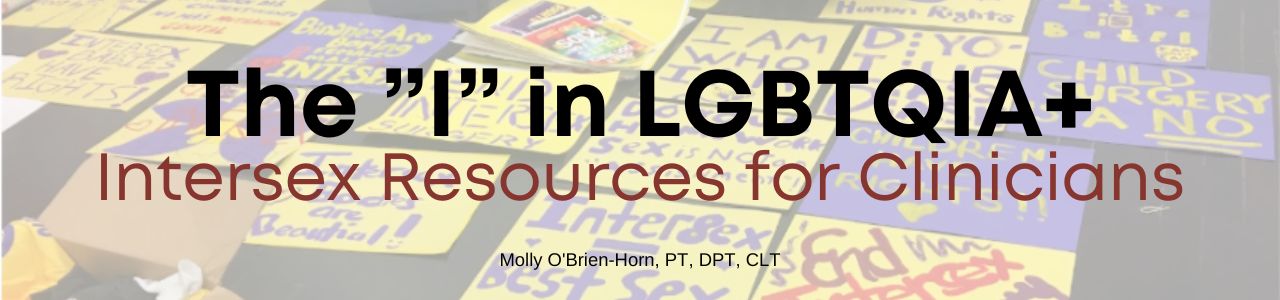

When we consider the intersectionality of sexual orientation and gender identity within the realm of intersex and LGBTQIA+ identities, we must recognize the multifaceted nature of individuals' experiences. For some intersex individuals, navigating aspects of identity may be complex, as their biological sex characteristics may not align with societal expectations of gender. Intersex individuals face a range of challenges in navigating their identities, including medical interventions without their consent, stigmatization, and lack of awareness and understanding from healthcare providers. These challenges highlight the need for clinicians to educate themselves on intersex experiences and provide inclusive and affirming care.
Resources for Clinicians to Support Intersex Patients
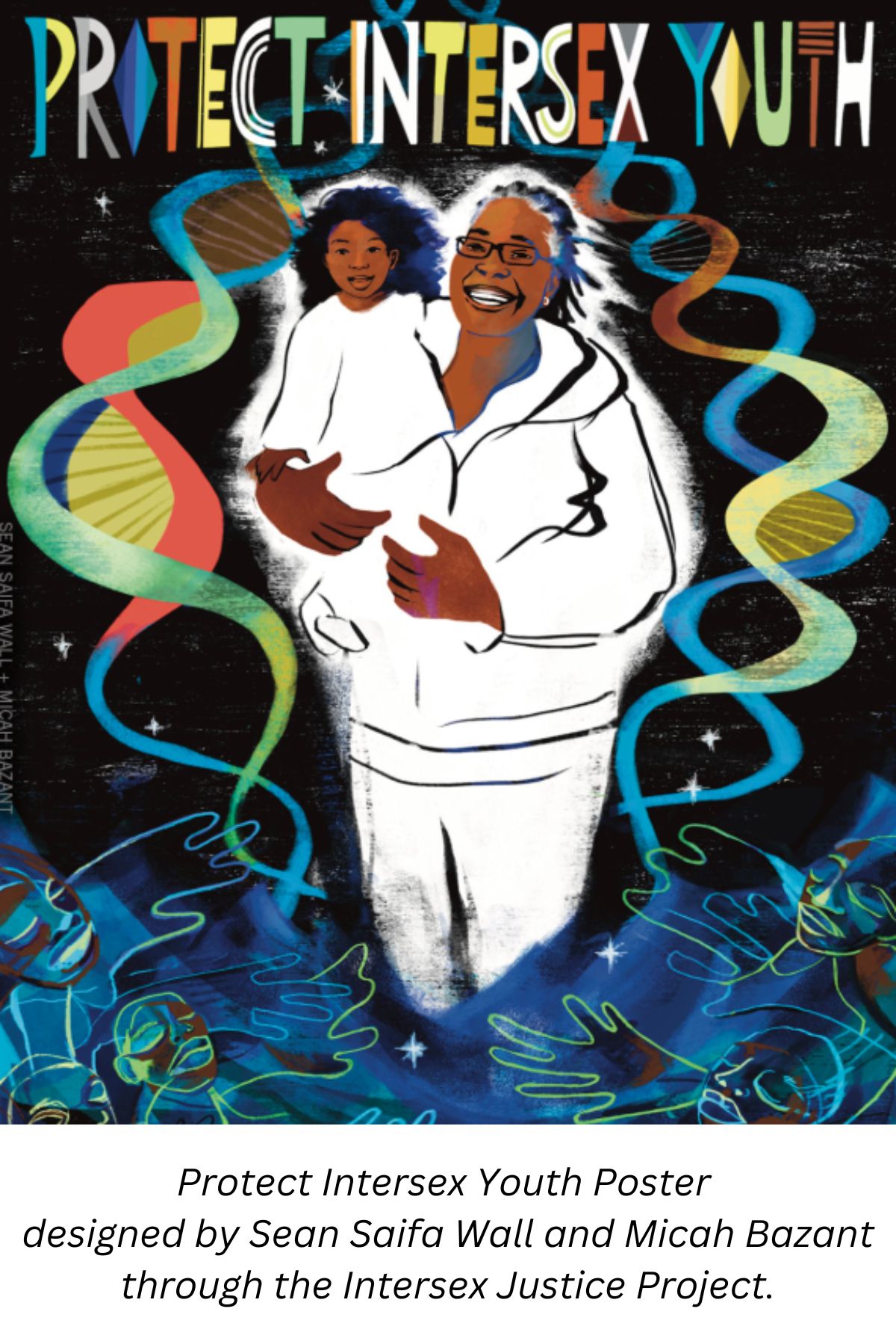 While you may be reading this thinking, ‘I don’t know anyone who is intersex,’ or ‘I don’t work with Intersex patients,’ you might be surprised to learn that you probably do! Intersex variations are as common as having red hair. The United Nations Free & Equal Initiative Intersex Fact Sheet states that “According to experts, somewhere between 0.05 percent and 1.7 percent of the global population is born with intersex traits. The upper estimate is bigger than the population of Mexico.” So, if you know, or have ever seen someone with red hair, you probably know or have seen someone who is intersex too.
Clinicians who are looking to better support their intersex patients can benefit from accessing resources specifically tailored to understanding and addressing the unique needs of this community. Two great Intersex-led organizations to help educate you and provide support to intersex patients and their caregivers are InterACT Advocates for Intersex Youth and InterConnect.
These organizations offer information and guidance on how to provide affirming care to intersex individuals and provide help to clinicians who want to educate themselves on intersex identities, familiarize themselves with the challenges faced by intersex individuals, and learn about best practices for promoting the health and well-being of their intersex patients.
Educate yourself, stand with intersex advocacy organizations, and amplify intersex voices to make a difference. Let's strive for a world where every identity is celebrated and respected because diversity strengthens us all. As Maya Angelou once said, "We all should know that diversity makes for a rich tapestry, and we must understand that all the threads of the tapestry are equal in value no matter their color."
So how do I learn more? What resources can I give to intersex patients and their families to support them? Well, to learn more about how to be an ally in healthcare to intersex patients and their families, and for more resources, register today for Intersex Patients: Rehab and Inclusive Care, scheduled for February 8th, 2025!
Additional Resources:
- InterACT Advocates, Lambda Legal (2018). Providing Ethical and Compassionate Health Care to Intersex Patients: Intersex-Affirming Hospital Policies. This guide incorporates input from medical practitioners, legal experts, and members of the intersex community. The guide offers model policies for hospitals designed to promote best practices and assist hospitals and their providers in delivering appropriate, intersex-affirming care. For example, the policies address issues of confidentiality, non-discrimination, gender identification, infant genital surgery, and sterilization, shared decision-making, and informed consent – issues that, when mishandled, can cause significant harm to intersex patients and their families, as well as open up medical institutions to significant liability. The guide also incorporates background information and explanations for each model policy to provide education in an area that has historically been misunderstood.
- Intersex Peer Support Australia (IPSA). https://isupport.org.au/. IPSA is a non-profit organization, led by people with variations of sex characteristics (sometimes known as intersex) who are passionate about combatting isolation, shame, and stigma through community connection and peer support. IPSA seeks to tackle the stigma and misconceptions that surround intersex variations through education and advocates on issues affecting the wider intersex community to improve affirmative healthcare, foster intersex pride, strengthen our community, and deepen social culture. IPSA is a peer-led, not-for-profit intersex organization and a registered health promotion charity.
- InterLink. https://www.ilink.net.au/. InterLink brings people together to talk about living with innate variations in sex characteristics with the support of trained counselors and intersex peer workers. InterLink also provides community care coordination, helping people get linked in with appropriate allied health and community-based services, advocacy, and peer support groups.
All Upcoming Continuing Education Courses

Rehabilitative Ultrasound Imaging Pelvic Health Satellite Lab Course - Self-Hosted - April 17 - 19 2026
Apr 17 2026 - Apr 19 2026

Rehabilitative Ultrasound Imaging Pelvic Health Satellite Lab Course - Edmond OK - April 17 - 19 2026
Apr 17 2026 - Apr 19 2026

Pelvic Function Level 2B - Satellite - Bethpage NY - April 18 - 19 2026 - SOLD OUT
Apr 18 2026 - Apr 19 2026

Pelvic Function Level 1 - Satellite - Seattle WA - April 18 - 19 2026 - SOLD OUT
Apr 18 2026 - Apr 19 2026

Pelvic Function Level 1 - Satellite - Salt Lake City UT - April 18 - 19 2026 - SOLD OUT
Apr 18 2026 - Apr 19 2026
Pelvic Function Level 1 - Satellite - Newberg OR - April 18 - 19 2026 - SOLD OUT
Apr 18 2026 - Apr 19 2026

Menopause Transitions and Pelvic Rehab - Remote Course - April 18 - 19 2026
Apr 18 2026 - Apr 19 2026

Pelvic Function Level 1 - Satellite - Wichita KS - April 18 - 19 2026 - SOLD OUT
Apr 18 2026 - Apr 19 2026

Oncology of the Pelvic Floor Level 2A - Remote Course - April 18 - 19 2026
Apr 18 2026 - Apr 19 2026
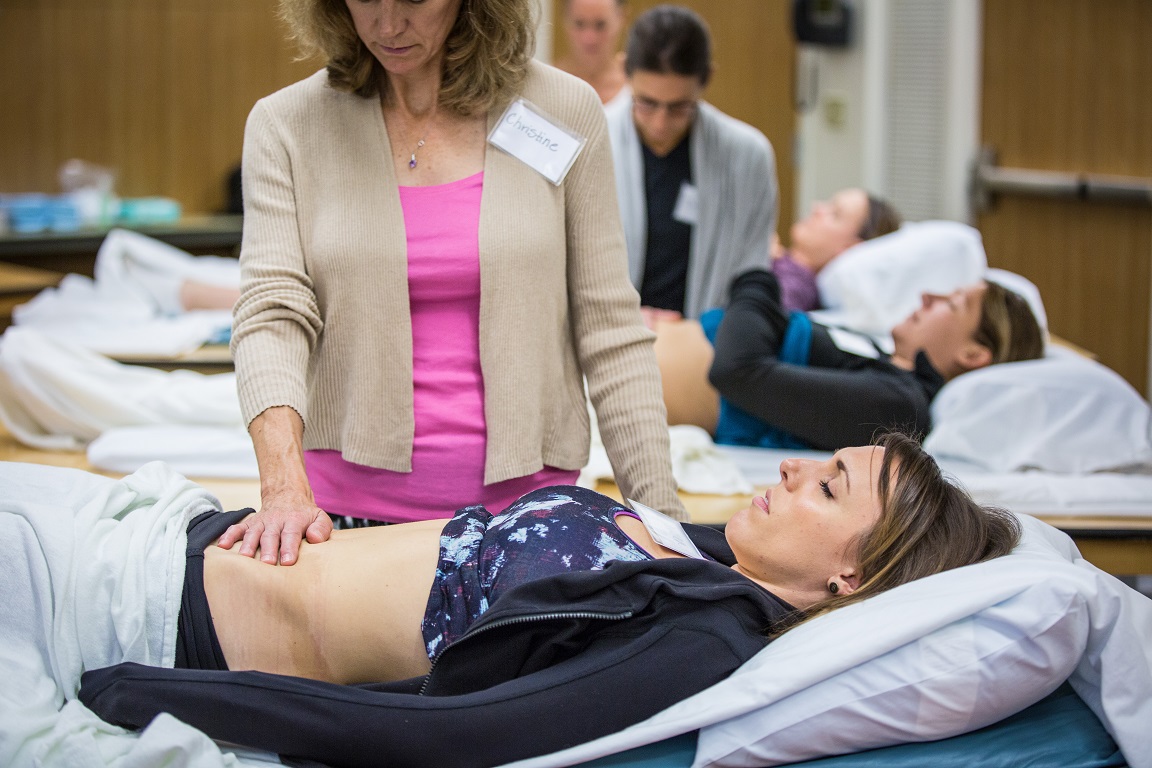

Pelvic Function Level 1 - Satellite - St. Augustine FL - April 18 - 19 2026
Apr 18 2026 - Apr 19 2026

Pelvic Function Level 1 - Satellite - Minneapolis MN - April 18 - 19 2026 - SOLD OUT
Apr 18 2026 - Apr 19 2026


Pelvic Function Level 1 - Satellite - Colorado Springs CO - April 18 - 19 2026
Apr 18 2026 - Apr 19 2026







Pelvic Function Level 2B - Satellite - Nashotah WI - May 9 - 10 2026 - SOLD OUT
May 9 2026 - May 10 2026


Mobilization of the Myofascial Layer - Satellite Lab Course - Torrance CA - May 15 - 17 2026
May 15 2026 - May 17 2026
Mobilization of the Myofascial Layer - Satellite Lab Course Self-Hosted - May 15 - 17 2026
May 15 2026 - May 17 2026

Mobilization of the Myofascial Layer - Satellite Lab Course - McKinney TX - May 15 - 17 2026
May 15 2026 - May 17 2026

Mobilization of the Myofascial Layer - Satellite Lab Course - Bradenton FL - May 15 - 17 2026
May 15 2026 - May 17 2026

Mobilization of the Myofascial Layer - Satellite Lab Course - Atlanta GA - May 15 - 17 2026
May 15 2026 - May 17 2026

Pediatrics Level 2 - Adv Pediatric Bowel and Bladder Disorders - Remote Course - May 16 - 17 2026
May 16 2026 - May 17 2026


Pelvic Function Level 1 - In-Person - Bridgewater NJ - May 16 - 17 2026 - SOLD OUT
May 16 2026 - May 17 2026