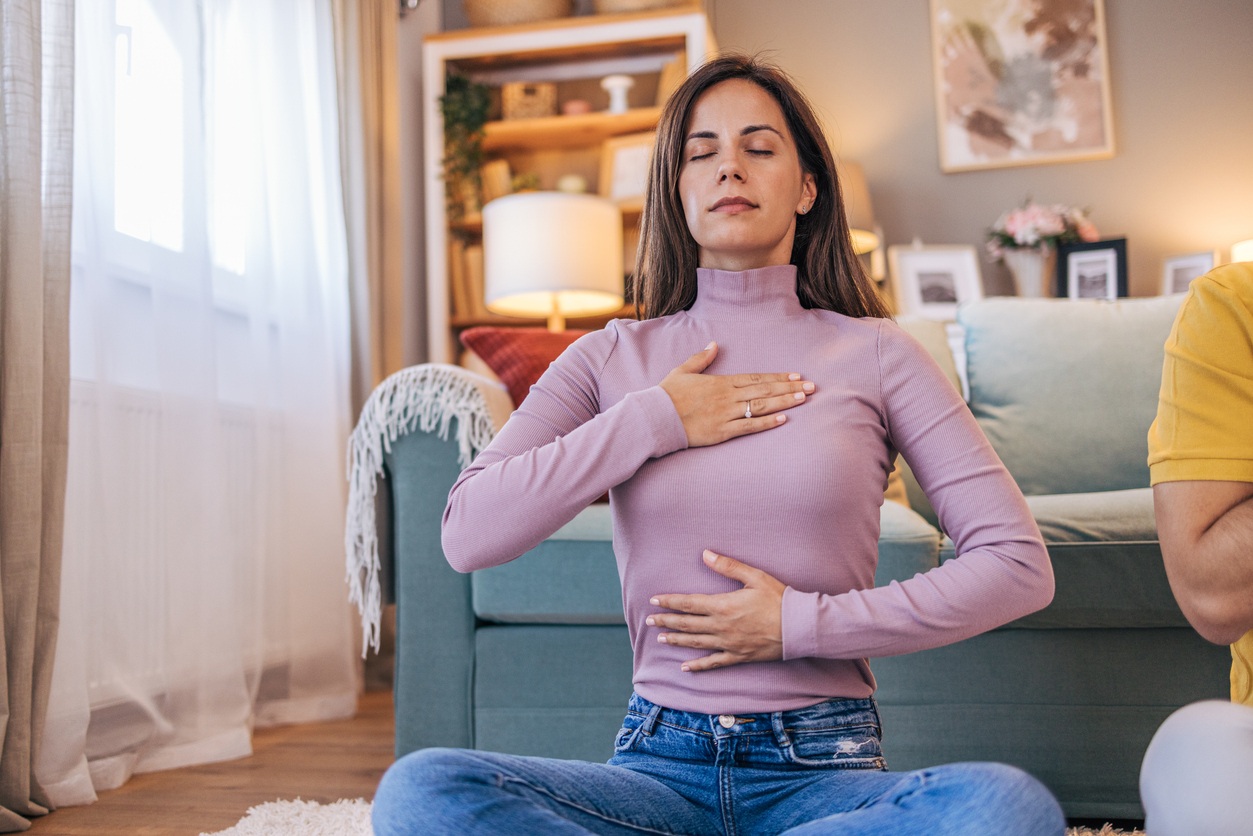

Abdominal bloating and distension are common symptoms reported in pelvic health practice. While many individuals experience occasional bloating that resolves without intervention, persistent or long-standing distension can significantly impact quality of life. Patients often report discomfort, sleep disruption, dietary restrictions, and frustration when symptoms persist without clear answers.
One condition associated with these symptoms is abdomino-phrenic dyssynergia, a disorder involving a paradoxical relationship between the diaphragm and abdominal wall.
Under normal conditions, when intraluminal gas increases in the gastrointestinal tract, the body responds with a coordinated pattern:
- the diaphragm relaxes, and
- the abdominal wall contracts
This response helps maintain abdominal shape and pressure regulation.
However, in abdomino-phrenic dyssynergia, the opposite pattern occurs. The diaphragm contracts downward while the abdominal musculature relaxes, leading to visible abdominal distension and discomfort. Dysfunction of the pelvic floor is also frequently associated with this condition, reinforcing the importance of a comprehensive evaluation of the entire pressure management system.
Traditional management strategies include biofeedback therapy and breathing retraining, both aimed at restoring appropriate neuromuscular coordination.
A Clinical Case Example
In our clinic, we are seeing an increasing number of referrals for patients diagnosed with abdomino-phrenic dyssynergia. One recent patient illustrates how breathing mechanics and musculoskeletal restrictions can contribute to these symptoms.
The patient was a 72-year-old female with a long-standing history of abdominal bloating and distension.
She reported:
- Bloating and abdominal distension throughout the day, worsening toward evening
- Limiting evening food intake due to abdominal discomfort and “tightness”
- Pain rated 3–5/10 in the morning, increasing to 8/10 by late evening
- Difficulty sleeping due to the abdomen feeling “hard and tight” at bedtime
Examination Findings
Physical examination revealed several contributing factors:
- Significant tightness in the posterior chain and erector spinae in the thoracic and lumbar regions
- Reduced thoracic rotation and mobility
- Connective tissue restrictions in the upper abdominal quadrants, especially the epigastric region and inferior rib cage
- Decreased lower rib cage mobility
- Difficulty producing a prolonged or forceful exhale
- Reduced ability to relax the pelvic floor following contraction
These findings highlighted the interaction between breathing mechanics, rib cage mobility, myofascial restrictions, and pelvic floor coordination.
Treatment Approach
Treatment included a multi-system approach addressing breathing, mobility, and neuromuscular coordination.
Interventions included:
- Biofeedback therapy
- Visceral mobilization techniques
- Thoracic spine and rib joint mobilizations
- Soft tissue techniques, including gentle diaphragm release
- Breathing retraining
- Techniques focused on pelvic floor relaxation
The patient completed nine treatment sessions, combined with a structured home maintenance program that she followed consistently.
Outcomes
By the end of treatment, the patient reported:
- 70% overall improvement in symptoms
- Ability to eat evening meals without discomfort
- Restful sleep through the night without abdominal tightness
This case highlights how restoring efficient breathing mechanics and rib cage mobility can significantly influence abdominal pressure regulation, pelvic floor function, and patient comfort.
Why Breathing Matters for Pelvic and Orthopedic Therapists
Breathing is far more than a respiratory function. The diaphragm plays a central role in:
- pressure regulation
- core stability
- pelvic floor coordination
- movement efficiency
Understanding how breathing integrates with the musculoskeletal system can significantly expand a clinician’s ability to address persistent symptoms that may otherwise be overlooked.
In the course Breathing and the Diaphragm: Pelvic and Orthopedic Therapists, we explore these relationships in depth and provide clinicians with practical tools to assess and treat dysfunctional breathing patterns.
Participants will learn how to:
- Explain normal diaphragmatic breathing and the role of the internal and external oblique musculature
- Assess and treat dysfunctional breathing patterns including chest, abdominal, and paradoxical breathing
- Understand the role of intra-abdominal pressure (IAP) in spinal stability
- Apply the concept of regional interdependence in patients with pelvic or back pain
- Recognize how postural patterns influence diaphragm and pelvic floor function
- Identify myofascial contributors to dysfunctional breathing and apply appropriate treatment techniques
- Perform rib and thoracic spine mobilizations to improve respiratory mechanics
- Develop exercise progressions for breathing retraining in clinic and home programs
- Integrate diaphragmatic breathing strategies into athletic rehabilitation
Understanding the relationship between breathing mechanics, mobility, and pelvic floor function allows clinicians to address dysfunction from a more integrated perspective and can lead to meaningful improvements in patient outcomes.
Aparna Rajagopal, PT, MHS, WCS, PRPC, Capp-OB Certified is the lead therapist at Henry Ford Macomb Hospital's pelvic dysfunction program, where she treats pelvic rehab patients and consults with the sports therapy team. Her interest in treating peripartum patients and athletes allowed her to recognize the role that breathing plays in pelvic dysfunction.
Leeann Taptich DPT, SCS, MTC, CSCS leads the Sports Physical Therapy team at Henry Ford Macomb Hospital where she mentors a team of therapists. She also works very closely with the pelvic team at the hospital which gives her a very unique perspective of the athlete.
Aparna and Leeann co-authored the course, Breathing and the Diaphragm: Pelvic and Orthopedic Therapists, which helps clinicians understand breathing mechanics and their relationship to the pelvic floor.

Course Dates: March 14, 2026
Price: $450
Experience Level: Beginner
Contact Hours: 13.5
Description: This remote course is an integrated approach where participants will learn how the diaphragm, breathing, and the abdominals can affect core and postural stability through intra-abdominal pressure changes while looking at structures from the glottis and the cervical region to the pelvic floor.
This course includes assessment and treatment of the barriers by addressing thoracic spine articulation and rib cage abnormalities in the fascial system of muscles related to breathing and the diaphragm. Instructed techniques are applicable to patients who present with Diastasis Rectus Abdominis, pelvic pain, incontinence, and prolapse, as well as cervical, thoracic, scapular, and lumbar pain.


CPT code 97110 describes a therapeutic exercise procedure used in physical and occupational therapy to develop strength, endurance, range of motion, and flexibility for one or more body areas.
Herman & Wallace Senior Faculty member Pam Downey, PT, MSPT, DPT, WCS, BCB-PMD, PRPC, CSCS has been integrating Pilates into the treatment of pelvic floor and spine dysfunction for more than 20 years. She explains, “I use Pilates every day in practice to teach patients that movement is therapeutic and accessible—even for those who feel overwhelmed by their diagnosis.”
Pilates offers clinicians a unique lens for evaluating movement dysfunction. Because many patients are unfamiliar with Pilates, these exercises often reveal compensatory patterns that may be contributing to their symptoms. Dr. Downey highlights how equipment like the Reformer allows her to adapt spring tension - providing support when needed or adding challenge for patients further along in their rehab journey.
A Clinical Pearl from Dr. Downey
One of Dr. Downey’s go-to strategies involves using Pilates Footwork and Hamstring Arc strap work in the treatment of a short, tight pelvic floor.
Patients with restricted adductors, hip flexors, or hip rotators—often the result of prior injury or habitual postures - can inadvertently create excessive tension in the pelvic floor. When this is paired with dysfunctional breathing patterns (such as upper chest breathing), intra-abdominal pressure (IAP) regulation becomes compromised.
By integrating breathwork into supine strap exercises, patients experience both a sensory and motor connection to lengthening the pelvic floor. This helps them achieve the sought-after “drop” during volitional pelvic floor movement.
Dr. Downey reflects, “Patients really understand it once they feel their muscles stretch and release on the equipment. The best reward for me is when they return with improved movement patterns and reduced pelvic floor symptoms.”
Is This Course Right for You?
This Pilates-focused rehabilitation course may be a fit if you:
- Want to explore Pilates, but don’t know where to start. You’ll be introduced to the original 34 mat exercises and select Reformer activities, with an emphasis on safety and clinical application. This course is not a replacement for formal Pilates certification, but rather a way to build on your existing clinical expertise.
- Have strong pelvic health knowledge, but want patients to be more active in their care. Learn strategies to take patients beyond the treatment table and empower them through movement.
- Prefer hands-on, movement-rich learning. This course offers a lab-heavy format focusing on problem-solving within the lumbopelvic-hip complex. Even experienced Pilates practitioners will benefit from the discussion on integrating Pilates into pelvic health treatment.
By weaving Pilates into therapeutic exercise (CPT code 97110), clinicians can reclaim the therapeutic intent of movement - empowering patients with strategies that are safe, accessible, and transformative.
Ready to integrate Pilates into your pelvic health practice?
Join Pilates Therapeutic Exercise for Pelvic Health with Pamela Downey, PT, MSPT, DPT, WCS, BCB-PMD, PRPC, CSCS on September 20–21, 2025.
AUTHOR BIO
Pamela Downey, PT, MSPT, DPT, WCS, BCB-PMD, PRPC, CSCS
 Pamela A. Downey is a Board-Certified Specialist in Pelvic Health Physical Therapy, Board-Certified in Biofeedback for Pelvic Muscle Dysfunction, and a Certified Pelvic Rehabilitation Practitioner. She has more than 25 years of experience treating individuals with pelvic pain, including neuralgias of the lumbosacral plexus, voiding and sexual dysfunction, pregnancy-related and post-partum musculoskeletal dysfunction, including diastasis recti, sacroiliac joint pain, and dyspareunia. She has extensive experience in applying Pilates therapeutic movement in physical therapy and pelvic health practice. Dr. Downey’s private practice, Partnership in Therapy, is located in Miami, FL, and welcomes all people from adolescents to octogenarians for personalized one-on-one care.
Dr. Downey is an adjunct professor in the Physical Therapy Program at the University of Miami Miller School of Medicine in Coral Gables, Florida. She received her Bachelor of Arts from Sarah Lawrence College and her Master of Science, Doctorate in Physical Therapy, and is ABD in her Doctor of Philosophy from the University of Miami Miller School of Medicine.
Dr. Downey has presented research and lectured nationally and internationally at professional conferences and has authored a book chapter on pelvic pain in the medical text Women’s Health Physical Therapy. She is actively involved in the Academy of Pelvic Health of the American Physical Therapy Association, a Polestar Pilates Rehabilitation Educator, and Senior Faculty in the Herman & Wallace Pelvic Rehabilitation Institute.
All Upcoming Continuing Education Courses

Rehabilitative Ultrasound Imaging Pelvic Health Satellite Lab Course - Self-Hosted - April 17 - 19 2026
Apr 17 2026 - Apr 19 2026

Rehabilitative Ultrasound Imaging Pelvic Health Satellite Lab Course - Edmond OK - April 17 - 19 2026
Apr 17 2026 - Apr 19 2026

Pelvic Function Level 2B - Satellite - Bethpage NY - April 18 - 19 2026 - SOLD OUT
Apr 18 2026 - Apr 19 2026

Pelvic Function Level 1 - Satellite - Seattle WA - April 18 - 19 2026 - SOLD OUT
Apr 18 2026 - Apr 19 2026

Pelvic Function Level 1 - Satellite - Salt Lake City UT - April 18 - 19 2026 - SOLD OUT
Apr 18 2026 - Apr 19 2026
Pelvic Function Level 1 - Satellite - Newberg OR - April 18 - 19 2026 - SOLD OUT
Apr 18 2026 - Apr 19 2026

Menopause Transitions and Pelvic Rehab - Remote Course - April 18 - 19 2026
Apr 18 2026 - Apr 19 2026

Pelvic Function Level 1 - Satellite - Wichita KS - April 18 - 19 2026 - SOLD OUT
Apr 18 2026 - Apr 19 2026
Oncology of the Pelvic Floor Level 2A - Remote Course - April 18 - 19 2026
Apr 18 2026 - Apr 19 2026
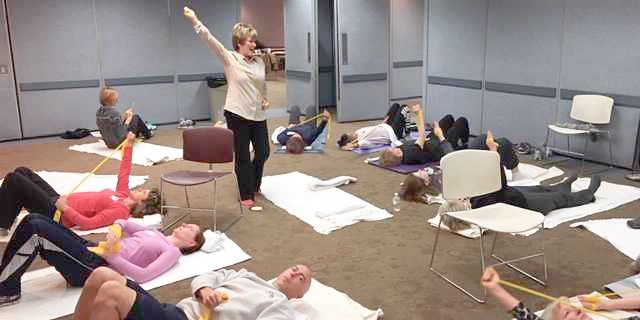

Pelvic Function Level 1 - Satellite - St. Augustine FL - April 18 - 19 2026
Apr 18 2026 - Apr 19 2026

Pelvic Function Level 1 - Satellite - Minneapolis MN - April 18 - 19 2026 - SOLD OUT
Apr 18 2026 - Apr 19 2026



Pelvic Function Level 1 - Satellite - Colorado Springs CO - April 18 - 19 2026
Apr 18 2026 - Apr 19 2026









Pelvic Function Level 2B - Satellite - Nashotah WI - May 9 - 10 2026 - SOLD OUT
May 9 2026 - May 10 2026


Mobilization of the Myofascial Layer - Satellite Lab Course - Torrance CA - May 15 - 17 2026
May 15 2026 - May 17 2026
Mobilization of the Myofascial Layer - Satellite Lab Course Self-Hosted - May 15 - 17 2026
May 15 2026 - May 17 2026

Mobilization of the Myofascial Layer - Satellite Lab Course - McKinney TX - May 15 - 17 2026
May 15 2026 - May 17 2026

Mobilization of the Myofascial Layer - Satellite Lab Course - Bradenton FL - May 15 - 17 2026
May 15 2026 - May 17 2026

Mobilization of the Myofascial Layer - Satellite Lab Course - Atlanta GA - May 15 - 17 2026
May 15 2026 - May 17 2026

Pediatrics Level 2 - Adv Pediatric Bowel and Bladder Disorders - Remote Course - May 16 - 17 2026
May 16 2026 - May 17 2026


Pelvic Function Level 1 - In-Person - Bridgewater NJ - May 16 - 17 2026 - SOLD OUT
May 16 2026 - May 17 2026